
Porcelain Tile Aggregate Concrete
Investigating the use of waste porcelain tiles as a partial replacement for natural coarse aggregates to produce sustainable, high-performance concrete.
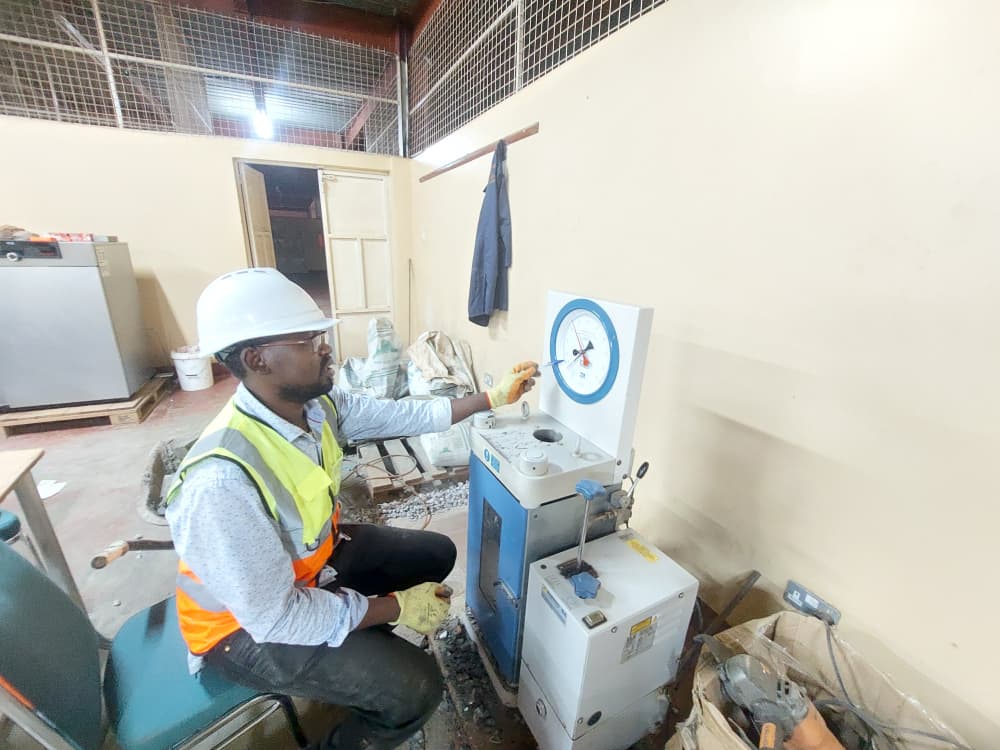
Project Overview
This research evaluates the feasibility of using crushed porcelain tile waste as a partial replacement for natural coarse aggregates in concrete production. The study focuses on improving sustainability, reducing construction waste and supporting circular economy practices while maintaining acceptable engineering performance.
The Challenge
Large quantities of porcelain tile waste are generated from construction and demolition activities. Most of this waste is disposed of in landfills, creating environmental challenges while natural coarse aggregates continue to be extracted from limited natural resources. This research investigates whether waste porcelain tiles can effectively replace natural coarse aggregates in concrete production without compromising engineering performance.
Research Objectives
Main Objective
To investigate the performance of concrete produced using porcelain tile aggregate as a partial replacement for natural coarse aggregate.
Material Properties
Determine the physical properties of porcelain tile aggregate before use in concrete.
Workability
Evaluate the workability of fresh concrete produced using different replacement levels.
Compressive Strength
Assess the compressive strength of hardened concrete after curing.
Materials Used
Ordinary Portland Cement
Primary binding material used in the concrete mix.
Fine Aggregate
Natural river sand used as fine aggregate.
Natural Coarse Aggregate
Conventional coarse aggregate used as the control.
Porcelain Tile Aggregate
Crushed waste porcelain tiles used as a partial replacement for natural coarse aggregate.
Clean Water
Potable water used for mixing and curing concrete.
Research Methodology
The experimental procedure followed a systematic approach from material collection to laboratory testing and data analysis.
Material Collection
Collection of cement, aggregates, porcelain tile waste and water.
Tile Preparation
Crushing and grading porcelain tiles into coarse aggregates.
Material Testing
Physical property tests were performed before concrete production.
Concrete Mixing
Concrete was prepared using different replacement ratios.
Curing
Specimens were cured for 7, 14 and 28 days.
Data Analysis
Laboratory results were analysed and compared with the control mix.
Experimental Tests
Specific Gravity
Water Absorption
Moisture Content
Sieve Analysis
Slump Test
Compressive Strength
Research Results
The laboratory investigation demonstrated that porcelain tile aggregates can partially replace natural coarse aggregates while maintaining satisfactory engineering performance.
22.70 MPa
Highest 28-Day Compressive Strength
10–20%
Recommended Replacement Level
2.34
PTA Specific Gravity
7.77%
PTA Water Absorption
0.57
Water/Cement Ratio
M15
Concrete Grade
Major Findings
Sustainable Material
Porcelain tile waste has significant potential as a sustainable construction material.
Engineering Performance
Concrete containing porcelain tile aggregates achieved acceptable compressive strength.
Environmental Benefit
The study supports circular economy principles by reducing landfill waste and conserving natural resources.